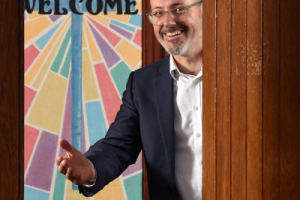



Dave Shaw is Director of Sanctuary Supported Living and outlines what responsible leadership looks like as housing with care takes on a broader role
As boundaries are redrawn across the social care system, housing with care is taking on a more pivotal role. It’s now supporting people with levels of complexity that would, in the past, have been met through more specialist or clinically focused provision. As pressures elsewhere across the system limit access to those services, housing providers are responding to a wider and more demanding range of needs within community settings.
This calls for a more strategic conversation about how safety, freedom and choice are balanced, and where responsibility should sit within a modern care system. As a sector, we’re not afraid of complexity. Housing with care can support people with a wide range of needs if the system is set up right. When trust, shared understanding and partnership sit at the centre, greater responsibility enables more integrated ways of working that reflect the realities of people’s lives. When local authorities, commissioners and specialist agencies align their expertise, the system is better able to adapt as needs change.
Regulation has an important role to play in this. When approached constructively, it provides a shared point of reference for what good looks like and supports responsible decision‑making and continuous improvement. This is why developments such as Part 2 of the Supported Housing Act are welcome. The requirement for every local authority to produce a five‑year strategy reflects the long‑term, joined‑up planning the sector has been calling for, moving away from short‑term responses, towards place‑based solutions shaped by local need.
Our own decision to work within Ofsted regulation reflects a commitment to being the best we can be as a provider, so that our customers can be their best. We are especially proud to work alongside local authorities and Ofsted to develop provision for a client group that has not always been well served, using regulation as a platform for learning, collaboration and shared progress rather than just compliance.
As housing with care responds to increasing levels of complexity, it’s also enabling outcomes that would be far harder to achieve elsewhere in the system. Supporting people within their own homes and communities allows needs to be addressed earlier and in ways that are more proportionate and person‑centred. Well‑designed housing with care plays a preventative role in its own right, supporting safety and independence through accessible environments, adaptations and consistent day‑to‑day support.
This is most effective where services are designed together rather than bolted on. The Lookout, our mental health crisis service in Hampshire, is a good example of what this looks like in practice. Developed in partnership with Hampshire and Isle of Wight Integrated Care Board and Southern Health NHS Foundation Trust, the service provides short‑term supported accommodation within a psychologically informed environment. By offering community‑based support at a point of crisis, it helps stabilise situations early and reduces the need for escalation into more restrictive or clinical settings.
The same preventative approach applies in our retirement communities. By working closely with local GP practices to deliver flu vaccinations on site, and welcoming opticians to support eye health, care is brought closer to home. These practical interventions reduce barriers to access, support ongoing wellbeing and help people remain independent for longer.
That said, navigating this increasingly complex landscape is not without its challenges. The clearest lessons we’ve learned is that effective collaboration depends as much on communication as it does on structure or intent. Health, housing and social care don’t always speak the same language, and differences in professional frameworks and ways of working can create gaps even where there is shared commitment to good outcomes. Closing those gaps takes effort and a genuine willingness to understand each other’s roles more clearly.
Plus, while expectations continue to rise, funding has not always kept pace. Housing with care is supporting people who need more intensive and responsive support, and for this to be sustainable, funding arrangements must recognise both the complexity of need and the intensity of support now being delivered.
Crucially, meeting rising expectations relies on a workforce that is properly paid, professionally recognised and supported to do its job well. At the same time, it’s important to be clear about where responsibility should sit. Housing with care can play a vital role in supporting people with complex needs, but it cannot and should not be expected to take on risks or interventions beyond the skills, training and professional scope of its workforce.
Ultimately, larger providers like us are well placed to navigate the growing responsibilities of housing with care when strong partnerships are in place, roles are clearly understood and the wider system recognises that joined‑up working is essential to unlocking meaningful outcomes. For others, the challenge is greater. Addressing that imbalance is critical if housing with care is to remain both resilient and inclusive as part of the wider health and care system.