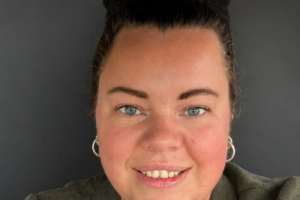


Kaddy Thomas, Founder of Carers Collective, explores why connection, community and belonging are essential lifelines for unpaid carers — and how isolation can quietly consume those supporting others every day.
Humans are hard-wired for connection. It’s a fundamental biological and psychological necessity for survival, health, and thriving. Rooted in evolution, the social bonds we form throughout life provide security, emotional and practical support. Not only that, but we now also know isolation increases the risk of disease, cognitive decline, and premature death. This makes connection as vital as food, water, or shelter.
We find connection in the communities we become a part of or create, whether that’s family, workplace, religious group, shared interest, or social circle. These communities are even more important in an increasingly digitalised world. In an attempt to get offline – more people are seeking out community to support their mental health, find belonging, security, and a shared purpose.
Yet not everyone has access to this. Caregivers are often isolated and lonely. They take on one of the hardest roles there is—providing ongoing support for a loved one. For many, this means giving up work, living on a reduced income, and being in their caring role 24/7, 365 days a year.
I think we would all agree – this goes far beyond a full-time job. Although most carers want to support their loved one, the role can be all-consuming and relentless, with a serious impact on both mental and physical health.
I’ve been a full-time carer and care manager for my son Elijah for 20 years. Elijah’s needs require round-the-clock care from a team of carers, which I manage.
Before 2020, this was the sole focus of my life. I became institutionalised, absorbed and consumed by my caring responsibilities. It was all I spoke about and all I thought about. For many carers, this experience is familiar. You live and breathe it every day: an endless loop of appointments, calls, emails, meetings, and navigating health and social professionals’ attitudes, judgements, and opinions. My conversations were filled with frustrations—feeling judged, overwhelmed—and everything centred around caring and Elijah.
There’s no real switching off. Even now, a carer might call at any hour to say they can’t get in, and I need to find a replacement.
Coaching was a game changer. My coach, Tamsin Garrie, helped me see that I needed to manage my own needs and take responsibility for my thoughts, language, and actions. That shifted how I showed up, how I experienced my role and how I communicated with the paid carers and professionals in my life.
Then lockdown and Covid hit. While it was a difficult time, it also had a profound impact on me in a positive way. Because Elijah was vulnerable, I had to self-isolate for six months.
During that time, something unexpected happened. I found an online community of businesswomen. Suddenly, I could connect, meet people virtually, and my world began to open up.
I realised I could build relationships outside of Elijah’s care team—who had been my main community, but were also paid to support him. This was different.
It felt liberating. I could talk to other women, get to know them, and have conversations that weren’t solely about Elijah and his needs. It broke me out of that sense of being institutionalised.
From that inspiration, Carers Collective and the six-week coaching programme were created. Earlier this year, inspired by the communities I had experienced—and by a friend who is a carer in Caerphilly—I decided to create my own. Coffee, Cake, Collaborate was born.
Both in-person and online, this community offers a space to share with others who ‘get it’. You can turn up, be yourself, and feel less alone, knowing others have the same experience.
We all want to feel loved, supported, and connected—whether through family, work, or faith. But carers need this more than most.