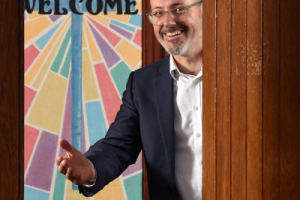



Hamida Subhan, Chief People Consultant at Outcomes Consulting, examines why social care providers must stop treating HR as reactive paperwork and start using it as a practical tool to strengthen culture, retention and care quality.
As a sector-leading consultancy specialist, when clients reach out to us for HR and employment support, discussions about the issues they are facing relate to workforce shortages, turnover and pressure.
As experts, we know underneath all of that is something simpler: their workforce want to feel supported and valued. When that’s in place, we can diversify our support with our clients to build stronger and happier employees who have a shared goal of delivering good quality outcomes.
We don’t believe in HR being an afterthought, or as a set of documents sitting in a folder, but as something lived and breathed every day. The reality, though, is that for many grassroots organisations, HR has grown reactively once problems arise. Policies are written when they’re needed to address a difficult situation, processes are shaped by immediate pressures, and consistency and fairness in practice can be difficult to maintain.
Our work at Outcomes Consulting has been about helping organisations shift that mentality. We don’t overcomplicate things, but we make HR practical, bespoke and genuinely useful to our clients.
Start with the basics and do them well
A lot of the organisations we support already have policies in place. The challenge isn’t always creating them—it’s making them work in practice based on their company ethos, values and culture.
We’ve worked alongside grassroots services to develop, review and embed HR policies, procedures and practices that reflect how their services operate at ground-level and how they envision their organisational journey. That means sitting down with owners and leadership teams, understanding the reality on the ground, and advising on practices and approaches that feel workable, not just compliant.
Working with our clients, we advise on how when decision-making becomes more consistent, they are less like to approach situations reactively during crisis points. With our insight in the sector, organisations have also seen smoother regulatory experiences, with fewer issues raised around workforce practice.
Through our work, we have seen confidence in owners and operators grow as they seek our expertise to guide them through their corporate strategy. Leaders and managers feel clearer about their roles and responsibilities and understand a thriving workforce culture is set and modelled by them. However, a well-rounded leader allows critical thinking by their workforce but embraces alternative views from all involved in their organisation.
Creating stability in a pressured workforce
Retention is one of the biggest challenges in social care, and our experience as leaders has shown that employees rarely leave for a single reason. More often, it comes down to a combination of unclear expectations, limited support, and inconsistent management.
Through our HR and people strategy work, we help organisations take a step back and look at what’s really driving turnover in their service. We challenge thinking and encourage self-reflection to develop practical changes—strengthening induction, clarifying roles, improving supervision, and making sure people feel supported in their work.
These aren’t quick fixes, but they are effective when adopted.
Services we’ve supported have reported improved retention, stronger team relationships, and a noticeable reduction in conflict. When expectations are clearer and processes are applied fairly, many of the issues that lead to grievances or dissatisfaction reduce significantly. These meaningful steps lead directly to better care.
Embedding inclusion in a real way
Our approach to inclusion has been to look at how people are recruited, how policies are written, and how decisions are made. Small changes, done consistently, can make a significant difference.
This work has been recognised through our nominations for a National Diversity Awards, but more importantly, it’s reflected in what everyone tells us. People feel more valued, more included and more confident through the work we deliver.
Supporting leadership to lead
Part of our work has been supporting leaders to feel more confident in their role as people managers. That includes having honest conversations about their workforce, and navigating change in a way that feels fair and consistent.
For many leaders, this is about building confidence as much as capability. Once that’s in place, HR becomes less about reacting to problems and more about shaping the kind of organisation they want to lead.
This approach has also been recognised more widely, including our nominations for the Women of the Year Awards 2026, reflecting leadership in driving change within the sector.
Keeping the focus on outcomes
Our work helping organisations with HR and people support is about outcomes and ultimately, you see it in the quality of care being delivered.
Our focus has always been to keep that connection clear. Every policy, every process, every piece of support should link back to improving outcomes—for organisations, for staff, and for the people they support.
For grassroots organisations in particular, the aim isn’t perfection—it’s consistency, clarity and sustainability.
That’s what we continue to work towards. Helping services build HR approaches that fit their reality, support their people, and stand up to the pressures they face every day.