
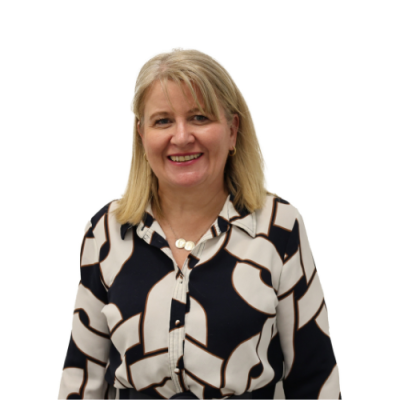

Wendy Cowell, Director of Care Quality & Governance from Excelcare examines the realities of everyday risk in social care, exploring safeguarding responsibilities, provider obligations, and the ethical balance between safety, autonomy and quality of life.
At Excelcare, many of the risks we navigate are not headline-grabbing or extraordinary. They are the everyday decisions that sit at the intersection of safety, choice and quality of life — often shaped by complex relationships and differing levels of understanding.
The risk of falls is one such example. Decisions around mobility, the use of high-low beds, lighting, room layout and how familiar an environment feels can all influence confidence and safety, particularly for people living with dementia. These are not static risks; they evolve daily, requiring teams to remain responsive and reflective.
Another area of everyday risk relates to the use of bed rails. Families often come to us with expectations shaped by hospital settings, where bed rails are commonly used as standard, without an understanding of how, in a long-term living environment, they can introduce risks of injury, restriction and reduced choice. Similarly, eating and drinking at risk presents its own challenges. Where modified diets and IDDSI levels are in place, some individuals with mental capacity may choose to eat foods outside of recommended levels. For them, this choice is often closely connected to enjoyment, identity and independence.
These examples highlight that everyday risk in care is rarely straightforward. It requires careful navigation, where safety, autonomy and wellbeing must be balanced amid differing views and expectations.
From our experience, it is often the smallest decisions that have the greatest influence on quality of life. The placement of a bed within a room, the positioning of lights, how someone moves through their environment, or how a routine is structured can all impact confidence, comfort and independence.
Zoe Halliday, Head of Care and Personhood at Excelcare, reflects on the importance of keeping the person at the centre of these decisions:
“Person-centred care is about seeing the individual first, not the risk. When we take the time to understand what really matters to someone, we can often find ways to enable choice that still feel safe and respectful.”
Small decisions are rarely isolated; they build over time. Families and teams alike can naturally be risk averse, but positive risk taking is not about one significant leap. It is about taking small steps, reviewing regularly, and gradually building confidence.
As Zoe notes, “It’s often not about the activity itself, but the outcome it gives the person — connection, purpose, enjoyment or a sense of normality.” When teams focus on those outcomes, they are better able to adapt, modify and think differently about how to support meaningful everyday life.
There is often a tendency to over-manage risk in routine situations, driven by a natural desire to keep people safe. This can be influenced by family expectations and well-intentioned direction, particularly where risk feels uncertain. As humans, we are all, to some degree, risk averse — especially when supporting others.
However, focusing solely on safety can sometimes overshadow the wider question of quality of life.
From our experience, it is important to step back and consider what we are ultimately trying to achieve for the individual. For example, an individual with limited mobility may wish to walk to the local shops. While this introduces an element of risk, the physical, emotional and social benefits may outweigh those risks when they are thoughtfully considered.
By reviewing and adapting over time, risk can be managed proportionately — allowing people to experience meaningful activity, independence and fulfilment alongside safety.
Teams feel confident in taking a more person-centred approach when they are supported and empowered to champion the individual — even when this means challenging established norms.
Moving away from a one-size-fits-all mindset relies on skilled teams who are encouraged to use professional judgement, reflect on practice and think differently about how someone can be enabled to achieve what matters to them.
Risk management remains part of the conversation, but the emphasis shifts to how risk is understood and supported. This requires teams to consider not only whether a person understands an activity or decision, but how information is shared, reinforced and adapted — using techniques such as demonstration, visual prompts, repetition and reassurance.
At Excelcare, this confidence is built through role modelling and a willingness to challenge the standard approach. Teams are supported to try, reflect and learn, rather than feeling constrained by fear of getting it wrong.
Staff confidence and organisational culture play a critical role in enabling choice and positive risk taking in everyday life. Teams are far more likely to feel confident in challenging the norm and championing the person when they work within an open and transparent culture, where learning is shared and professional judgement is valued rather than feared.
At Excelcare, this approach has been intentionally embedded. As Wendy Cowell explains:
“We have been holding weekly governance webinars for around 18 months, and since starting these, we have seen positive change to the way we work.”
These forums create space for managers and leadership teams to reflect together, challenge practice, raise concerns and share ideas. Crucially, they feel heard and involved in shaping policy and process, ensuring that guidance reflects real practice rather than idealised theory.
This inclusivity has had a direct impact on confidence across teams. As Wendy notes, “Because people have been part of the conversation and the change, when we do things differently, our teams come with us.”
That shared ownership creates consistency in values and reassurance that thoughtful, person-centred decisions are supported at an organisational level — even when they involve uncertainty or positive risk.