
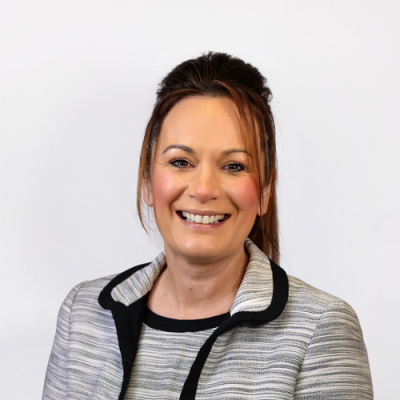

Virginia Perkins, Chief Executive of Hesley Group, reflects on the balance between values and qualifications, and why professionalising care should create pathways for progression rather than barriers to entry.
It is a question that comes up time and again in social care and perhaps now more than ever: do we still need qualifications to care?
At Hesley Group, the honest answer is yes—but not in the way people might think.
Care and support has always been, at its heart, about people. Compassion, patience, resilience and kindness are not things you can simply teach in a classroom. They are often shaped by lived experience, values and the kind of person someone chooses to be.
We have seen time and again that some of the most impactful colleagues in our services have come from non-traditional backgrounds: retail, hospitality, construction and even people who have their own lived experience of care or supporting family members.
If we over-professionalise the entry point into care, we are vulnerable to closing the door on exactly those people.
But—and this is crucial—if we fail to professionalise what happens next, we risk something far more serious: inconsistency, risk and ultimately a failure to deliver the quality of care that the people we support both need and deserve.
The sector has always relied heavily on values-based recruitment. At Hesley, we actively look for people who demonstrate empathy, curiosity and a genuine desire to support others to live meaningful lives.
You can train someone in clinical protocols. It is far harder to train someone to care.
However, this cannot be where the journey ends.
In specialist services, supporting individuals with intensive support needs, behaviours of concern or significant health requirements is highly skilled work. It requires an understanding of safeguarding, positive behaviour support, communication strategies and, increasingly, partnership working with clinical teams.
This is not unskilled work. It is deeply skilled work, and it should be recognised and developed as such.
At Hesley Group, we invest in all Support Workers by supporting them to achieve their Level 2 qualification, with further qualifications available following a successful probationary period. This forms part of a structured progression pathway that recognises development and enhances skills as colleagues advance within the organisation.
There is a risk in the narrative that care should remain “open to all” that we inadvertently diminish the expertise required to do it well.
Professionalisation is not about creating barriers. It is about creating pathways.
When we talk about professionalising the workforce, we are not talking about insisting someone arrives on day one with a qualification. We are talking about making a clear commitment that entering care is the start of a career, not just a job. We are talking about ensuring that learning is structured, continuous and valued, that skills are recognised, accredited and transferable, and that development leads to progression, whether clinically, operationally or into leadership.
This matters for three reasons.
Firstly, safeguarding. In specialist care, the margin for error is small. Understanding how to recognise, respond to and escalate concerns is not optional. It requires training, reinforcement and accountability.
Secondly, quality. Consistent, high-quality care does not happen by chance. It is the result of shared frameworks, evidence-based approaches and continuous professional development.
Thirdly, retention. One of the biggest challenges facing our sector is not simply recruitment—it is keeping great people.
If care roles are seen as low-skilled, low-paid and offering limited progression, people will leave. If they are seen as professions with status, development and opportunity, people will stay.
We need to be far more intentional about the journeys people can take.
At Hesley Group, we have seen the power of structured training and mentoring in action. Colleagues who joined with no formal qualifications have progressed into senior roles—not despite the lack of qualifications, but because they were given the opportunity to gain them alongside real-world experience.
This is where the balance lies: open the door wide to people with the right values, invest heavily in developing their skills and provide clear and supported progression routes.
Programmes such as apprenticeships and partnerships with education providers help bridge this gap. They allow people to earn and learn while removing financial and practical barriers to development.
There is also a wider context that we cannot ignore.
As automation and AI continue to reshape the labour market, many roles will evolve or disappear over time. Social care, however, remains inherently human.
This presents a significant opportunity. We can position care not as a last-resort job, but as a meaningful, future-proof career. One where human connection, judgement and emotional intelligence are not just valued—they are essential.
But to do that, we must elevate the role. Professionalisation helps us say: this is skilled work. This is important work.
So, do we still need qualifications to care?
We need them—but not as gatekeepers.
We need them as enablers of excellence.
We should not turn away someone with compassion because they lack a certificate. Equally, we should not leave them unsupported in developing the skills required to do the role safely and well.
The balance is this: values get you in, development takes you forward and professionalism sustains quality.
At Hesley Group, that is what we are striving for—a workforce that is both inclusive and highly skilled, where people can build long-term careers and where those we support receive the consistent, safe and person-centred care they deserve.
Because ultimately, this is not just about the workforce.
It is about the people whose lives depend on it.