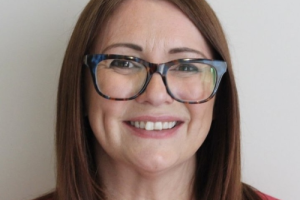

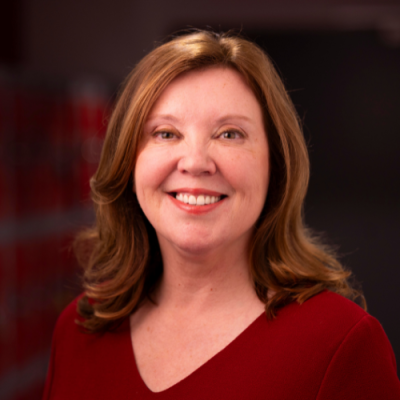

Dame Rachel de Souza, the Children’s Commissioner for England, reflects on the urgent challenges facing England’s most vulnerable children, and the voices she cannot ignore.
I am about to begin my sixth and final year as Children’s Commissioner. It’s a huge privilege to hold this role, and I do a lot of listening. I have heard from a million children since becoming Commissioner in March 2021, including tens of thousands of children in care. Using the powers this job confers, including powers of entry to facilities, I meet these children in secure children’s homes, youth prisons, in schools, and even as they turned up at Western Jet Foil in Kent seeking asylum.
I see some areas of fantastic practice, of brilliant professionals who are transforming lives. There are programmes and facilities across the country working with the most vulnerable children, leading with empathy and grace. Yet too frequently, the services working with these children are under‑resourced and underachieving. Low standards are tolerated in a way that would never be allowed in other sectors: one third of local authorities are judged less than good for children’s social care. None of our Young Offender Institutions are deemed safe, with shocking reports of violence and poor staff practice emerging routinely. Family support services have seen years of cuts.
As Children’s Commissioner I have a special responsibility to children who are care‑experienced or living away from home — a responsibility defined not only by legislation, but one I feel personally. As a teacher and headteacher for 30 years, I was part of a wave of reform that transformed outcomes for many children in school, but I also saw our most vulnerable children failed because these reforms never gripped the importance of wider support services in their lives. In September I published my School Census, a survey of nearly 90% of school leaders, which revealed their deep concerns about children’s lives beyond the classroom and laid bare the challenge of filling the gaps left by years of neglecting other services. Its findings were clear: children’s social care can no longer be treated as the junior partner in the services that improve children’s lives.
While there is no single solution to the challenges facing the care system, incorporating the UN Convention on the Rights of the Child would be a major step forward in how we protect children’s rights — and protect childhood itself. Many of the Convention’s principles are reflected in laws like the Children Act 1989, but full incorporation would make those rights directly enforceable, requiring public bodies to uphold children’s rights in every decision they make and every service they deliver. And as the modern world changes, we must look again at the Children Act, which was written with a focus on protecting children in their homes. Today many harms are external — exploitation, grooming, and the risks of the online world. A new Act must recognise these emerging risks and equip services to respond effectively.
For too long, the system designed to protect and support our most vulnerable children has been stretched to its limits. Too often, decisions about children in care are based not on what’s best for them, but on a lack of good alternatives. That means children moved out of stable foster care for cost‑saving reasons, siblings separated due to lack of space, children housed illegally in unsuitable placements like caravans or AirBnBs, disabled children’s needs overlooked, 16‑ and 17‑year‑olds treated as homeless instead of being brought into care, or children remanded into prison because there is nowhere else for them to go. The government’s recent announcement setting an ambitious target for foster care recruitment is incredibly welcome — but it must include specialist foster carers who can relieve pressure on the most acute parts of the system, and be backed by radical investment in new and safe children’s homes so that every child in care has a loving home.
It is often said that the best judgement of a civilised society comes from how it treats its most vulnerable citizens, yet time and again I see children who have been abused, exploited or groomed subjected to discrimination and punishment — often to a greater extent than the adults who harmed them. Nearly half of children in care (49%) who are ever given a caution or criminal conviction came into contact with the justice system after they went into care, not before. My caseworkers in my advocacy service, Help at Hand, routinely see children’s homes calling the police because a child breaks something. Children with complex needs or disabilities, whose behaviours require expert care, are criminalised for lashing out — behaviour that, in a family home, would be handled privately. A child would be allowed to be a child, not a documented incident. I am pleased that government has agreed to review the protocol used by police and other professionals who interact with children in care so they are not treated differently simply because of their backgrounds. Children tell me: “We want people who love us, someone that will stay with us” — and that must be the guiding principle for every professional who works with them.
As I enter my final 12 months as Children’s Commissioner, I want nothing less than for England to be the best place to be a child. We are at a critical juncture for children’s services, with reforms underway across social care, health and education. Children’s social care must receive equal ambition and attention. One in six children will have involvement from children’s social care at some point in their lives. Their voices and experiences must be at the heart of policymaking — they can no longer be an afterthought.