
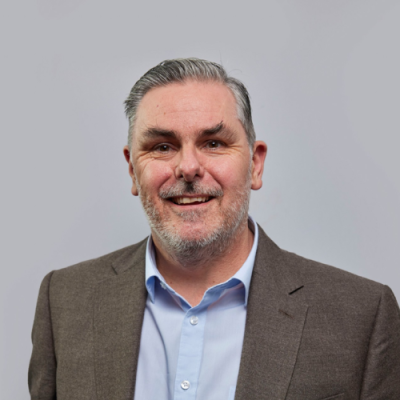

Paul Moore, Clinical Director, Exemplar Health Care explores how social care services that support people living with complex needs are already delivering personalised, relationship-based support and what the NHS can learn as it looks to embed these principles through the Government’s Cancer Strategy.
When the government published its National Cancer Plan in February 2026, Health Secretary Wes Streeting called it “the biggest shift in how we support cancer patients in a generation.” At its heart is a commitment that every patient will receive a Personalised Cancer Plan that looks beyond treatment to cover the full impact of cancer on their life: from mental health and fatigue to finances, relationships and returning to work.
I spent more than 30 years in the NHS, most recently as a Chief Nurse, before joining Exemplar Health Care as Clinical Director 18 months ago. When I read the Cancer Plan, my first reaction – no doubt shared by colleagues across social care – was an appreciation that many of the principles now being advanced within the NHS have long been embedded within specialist care services. This is the language we use every day. And this has been the way care has worked for decades.
That is not a criticism of the NHS. It is a reflection of the fact that the NHS and social care have, for too long, developed in parallel rather than together. The expertise required to deliver genuinely personalised care already exists. It has been built, tested, and refined in complex care settings, often for people the NHS found it hardest to support. The opportunity the Cancer Plan creates is to start sharing it properly.
At Exemplar Health Care, where we support adults living with complex needs across more than sixty services in England, personalised care is the driving force through which safe, sustainable, and effective care is delivered.
Holistic care means supporting the whole person, not just their condition. It means understanding that physical health, emotional wellbeing, relationships, independence, and identity are all inter-connected, and that clinical expertise only delivers its full value when it is brought together with support for the whole person. In complex care, one without the other is not enough.
Neurologist Oliver Sacks reminded us to consider that clinicians should “ask not what disease the person has, but rather what person the disease has”. That distinction is profoundly important. Too often, health and care systems organise themselves around diagnosis, pathway, or organisational boundary. Truly personalised care begins by understanding the individual experiencing the illness: their history, personality, aspirations, tolerances, fears, relationships, motivations, and the things that give their life meaning. Without that understanding, care can become technically competent, such as in the case of targeted gene therapy, yet also fundamentally impersonal.
Take Abi. When she moved into one of our homes, she had spent a long period in hospital following a spinal injury. Her previous placement had not been able to bring together the clinical support she needed with support for her day-to-day independence — which had affected her confidence and mobility. Our nursing team reviewed how her symptoms were being managed and worked with her to find a more effective clinical approach. With the right support in place, alongside physiotherapy and adaptive equipment, Abi began to feel safer and more in control. That clinical stability made a difference to the rest of her life: she started going out again, seeing friends, and going to gigs. Over time she was able to take back more control of her daily life.
Or Joel, who moved to one of our homes after living in services that could not bring together clinical support with a structured approach to building independence. From the outset, a multidisciplinary team worked with him to understand what he wanted from his life — not just what support he required. With consistent clinical input and physiotherapy, he progressed from taking a few steps with a frame to walking to his local shop. He developed practical life skills: managing money, planning meals, and cooking for himself. Joel’s story shows how bringing clinical expertise and support for independence together creates the foundation for lasting stability.
These are not exceptional stories at Exemplar Health Care. They reflect what effective care looks like when clinical expertise, rehabilitation, behavioural support, and personalised planning are brought together within a coherent model of care. Every individual supported by Exemplar Health Care has a My Exemplar Care Profile, a dynamic and highly-adaptive digital care profile developed, wherever possible, with the individual and their family, rather than developed for them. These profiles span 16 domains of care and support, including physical health, emotional wellbeing, communication, relationships, personal goals, spirituality, and sexual health. Importantly, they are reviewed regularly by a named nurse and adapted as needs, risks, preferences, and aspirations evolve over time.
Three lessons stand out for NHS colleagues beginning to implement personalised Cancer Plans.
First, personalised care only works when the individual and their family genuinely shapes the plan. There is a profound difference between a document completed about someone and a plan developed with them. That distinction is not semantic. It materially influences engagement, trust, adherence, outcomes, and quality of life.
Second, personalised care plans must function as live clinical and operational tools, not static documents completed at a single point in time. In complex care settings, symptoms, risks, tolerances, behaviours, and priorities can change rapidly. Unless review mechanisms are structured, multidisciplinary, and recurrent, personalisation quickly becomes nominal rather than real.
Third: the whole person must be the unit of care. Cancer does not just affect the body. It affects identity, relationships, purpose, and hope. Care models focused exclusively on diagnosis and treatment will always struggle to meet what matters most to people.
94% of Exemplar Health Care’s homes are rated ‘Good’ or ‘Outstanding’ by the CQC, well above the sector benchmark, reflecting the skill, dedication, and consistency of the team supporting people with some of the most complex presentations in the country. That is no coincidence, but rather what happens when clinical expertise and genuine whole-person support are properly brought together.
The NHS does not need to build this knowledge from scratch. The expertise already exists in providers like Exemplar Health Care. If the ambitions of the National Cancer Plan are to translate into meaningful improvement for patients, then health and social care must become substantially better at learning from one another, integrating expertise, and designing care around the realities of people’s lives rather than the boundaries of a disease or institution.