
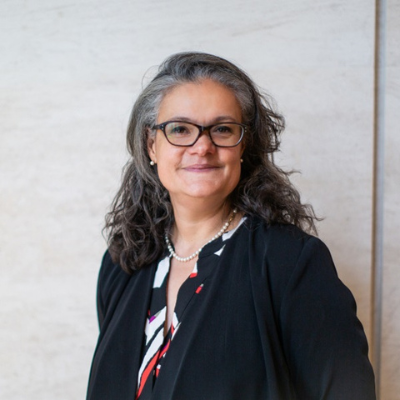

Emily Holzhausen CBE, Director of Policy and Public Affairs at Carers UK, examines the growing demands placed on unpaid carers—and why community-based care can only succeed if families are given choice, recognition and practical support.
Most of us will care at some point in our lives for a relative, friend or neighbour who is disabled, ill or older and needs support.
Many of us will provide lower-level care—perhaps an hour a week or slightly more. But some people provide much more. Official statistics show that 1.5 million people across England and Wales provide over 50 hours of care a week—far more than a full-time job. Some describe their responsibilities as round-the-clock or 24/7 care, where they are always switched on and alert to the needs of the person they support.
While caring has always been a feature of our society, evidence shows that it is becoming more intensive and the care being provided more complex. Our ageing population—expected to become a super-aged society within three years—combined with social care funding failing to keep pace with need and more healthcare being delivered closer to home, means families are providing more care than ever before.
Some 62% of carers told us they did not have a choice about taking on their caring role. The main reason was a lack of suitable alternatives: other family members were unable to provide care, or appropriate paid care services were unavailable or too expensive.
The impact on carers is clear. More than 600 people leave paid employment every day to care, while 57% of carers say they often or always feel overwhelmed by the intensity of their caring role.
Carers who have shared their experiences with us describe an expectation from services and professionals that families will provide care, particularly at the point of hospital discharge. Carers are not always involved in planning at this stage. They may be new to caring or unfamiliar with the particular situation, and may not fully understand what they are being asked or expected to take on.
Often, the support they are assured they will receive does not materialise. Getting this wrong is not only traumatic for families and the individuals requiring care; it can also result in readmission to hospital when the carer cannot cope. This is a false economy for already overstretched health services.
So, what would make a real difference to families providing care?
First, professionals need a proper understanding of what caring involves. Assuming someone will provide care could mean they have to give up paid work—something most families cannot afford to do.
For many who leave work to care, there is a severe financial penalty. Around 1.2 million carers live in poverty, including 400,000 in deep poverty. Carer’s Allowance, the weekly government benefit for those providing at least 35 hours of care, is the lowest benefit of its kind at £86.45 a week.
Carers need to understand the effect intensive caring could have on their finances, health and wellbeing. They must also receive clear advice about the support available to them.
Identifying and recording unpaid carers early can make a significant difference. It can help ensure carers receive the information and advice they need to provide care safely, benefiting both them and the person they support.
Health bodies could do much more to make this work for families. Carers UK wants to see legislative change placing duties on health bodies that mirror those in social care—requiring them to identify carers and provide appropriate support.
Some of the greatest frustrations carers experience involve the coordination and administration of services: completing forms, repeating the same information and joining up services that families reasonably expect to communicate with one another.
The Single Patient Record currently being introduced through legislation could make a considerable difference, particularly if carers can access it with the appropriate permissions from the person receiving care.
Ultimately, community-based care will only be sustainable if it works for carers as well as the people they support.
Families should be recognised as equal partners in care planning, but partnership cannot be taken as an assumption that they will provide unlimited, unpaid care. For many, burnout occurs simply because they cannot take a break from their caring role.
Carers need choice, information, respite and timely support. They also need the ability to work, to have a life beyond caring and to know there is a safety net when their caring role is no longer sustainable.
For care to move safely into communities, we must invest in the families who make that care possible.