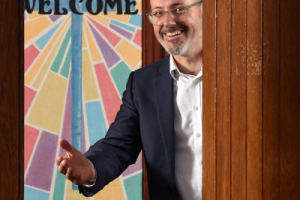

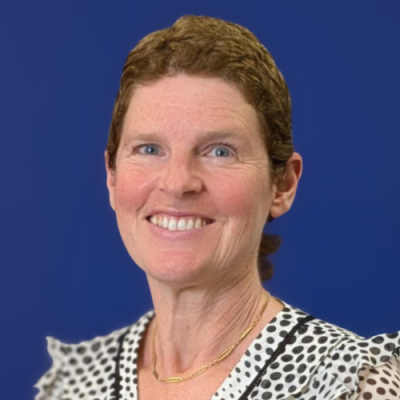

Michelle Dyson CB, Chief Executive of Alzheimer’s Society, reflects on the growing dementia crisis, the risks of policy without delivery, and why the UK can no longer afford to underestimate the scale of the challenge.
What keeps me awake at night is the sheer scale of the dementia challenge facing the UK — and whether we are moving quickly enough to respond to it.
Dementia is the UK’s biggest killer, affecting nearly a million people today and set to develop in one in three people born in the UK now. Yet despite the growing numbers, the day-to-day reality for people living with dementia and their families remains incredibly tough. Across the country, our frontline staff see people waiting far too long for a diagnosis, struggling to access support, and navigating health and social care systems that are already under enormous pressure. That has to change. But it will only change if dementia is recognised by Government as an urgent national priority.
There are opportunities ahead. The Government has committed to publishing a Modern Service Framework for Dementia and Frailty later this year, and there is growing political recognition that the system must prepare for the next generation of dementia treatments. But from my experience both inside Government and now leading a national charity, I know that ambition on paper means very little without meaningful delivery behind it. The devil will be in the detail.
We need a genuinely bold plan that improves care, keeps people healthier for longer, reduces deaths from dementia, and addresses the reality people are facing today. Baroness Casey has already highlighted the need for the NHS and Government to prepare for the new dementia treatments coming through the pipeline. There are nearly 200 trials currently underway for Alzheimer’s disease alone. The science is moving rapidly. But the NHS is not yet ready to fully benefit from the progress being made.
New treatments will only succeed if we tackle the fundamentals first: reducing diagnosis delays, strengthening post-diagnostic support, and ensuring services are equipped to deliver care properly. Getting this right would not only improve outcomes for individuals and families, it would also reduce pressure across the wider health and care system.
At the moment, delays in diagnosis remain one of the greatest concerns. On average, it takes three and a half years for someone to receive a dementia diagnosis. That matters because diagnosis is the gateway to care, support, treatment, and future planning. Earlier diagnosis gives people a better chance to live well for longer and make informed choices about their lives. Too often, however, families are left to cope alone.
I regularly hear stories of people being diagnosed and effectively sent home with a leaflet and little else, told to return to their GP when things become “unmanageable”. Compared with the specialist support pathways available for conditions like cancer, that experience can feel incredibly isolating and frightening.
What worries me even more is that the system is not failing equally. People from diverse communities, people with disabilities, those living in rural areas, and those from lower socio-economic backgrounds often face additional barriers to getting a diagnosis and accessing support. Inequality continues to shape outcomes in ways we are still not addressing honestly enough.
That is why I am encouraged by initiatives such as GRACE, funded by Alzheimer’s Society and led by Professor Claudia Cooper and Dr Jessica Budget at Queen Mary University of London. The project focuses on practical interventions around issues such as sleep and carer wellbeing, delivered directly in people’s homes or care home settings. That matters because we need to take support to people, rather than expecting people to fit around services.
If we are serious about reducing inequalities, we need more approaches designed around real lives and lived experience.
The workforce also keeps me awake at night. Our recent audit with Leeds Beckett University and IFF Research found that half of dementia training packages for adult social care workers contain just one to two hours of dementia-specific content, much of it online. Less than half of staff receive dementia training as part of their induction. In practice, this means many care workers are supporting people with dementia with little or no meaningful preparation.
Dementia is complex. An hour or two of training barely scratches the surface. Care staff want to deliver good care and they deserve better support in doing so. That is why Alzheimer’s Society is calling for mandatory, high-quality dementia training for all relevant adult social care staff, something we hope to see reflected in the Modern Service Framework.
One thing that has struck me most since moving from central Government into the charity sector is the gap that can exist between policy ambition and lived experience. When you work directly with people affected by dementia every day, the realities become impossible to ignore. Policy cannot be designed in isolation from the people living through these experiences.
At Alzheimer’s Society, we see first-hand the impact dementia has on individuals, carers and families every single day. That places a responsibility on us to ensure lived experience sits at the centre of policy conversations, not at the margins.
Despite everything, there is genuine hope. The science is progressing quickly. Public awareness is improving. More people understand that dementia is not simply an inevitable part of ageing and that risk can, in some cases, be reduced. The next few years could be transformational.
But we must not lose sight of the people struggling with the realities of dementia right now. Scientific breakthroughs alone will not help families left exhausted, isolated and unsupported today. The challenge ahead is balancing hope for the future with action in the present — because for nearly a million people across the UK, dementia is not tomorrow’s issue. It is today’s reality.