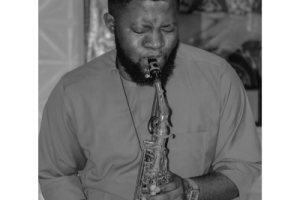


How Victoria Orsini, diagnosed with autism later in life, transformed years of being misunderstood into a mission to help others feel seen and supported.
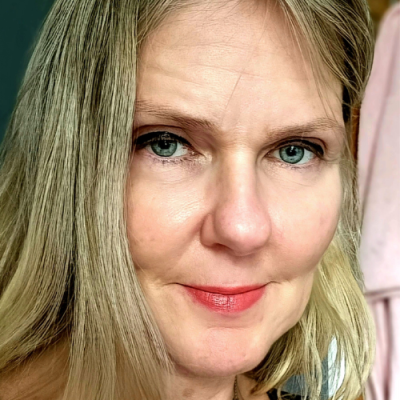
Victoria Orsini didn’t discover she was autistic until adulthood — and the diagnosis changed everything. After being diagnosed with Attention Deficit Hyperactivity Disorder (ADHD) and Complex Post-Traumatic Stress Disorder (CPTSD), a further assessment was suggested. What followed was a moment of clarity that led her to completely review every aspect of her life.
Having been permanently excluded from school and, like so many neurodivergent adults, labelled in ways that were often erroneous and unkind, the diagnosis finally helped things make sense. It marked a turning point — not just personally, but professionally too. For the first time, experiences that had felt confusing or isolating were reframed with understanding.
Before this, Victoria had built a successful career in ethical investment research, working in the sector for 12 years and being published in the Financial Times, Charity Times and Third Sector magazines. Alongside this, she had always felt a strong pull to give back to the community, inspired in part by her parents’ own commitment to volunteering. Her father, Christopher Woodbridge, was a Board Member of Age UK for many years, and her mother also volunteered for many years at a Princess Alice shop. That sense of wanting to make a difference stayed with her.
She became a Trustee with MIND in Kingston and, over the years, gained a counselling qualification to complement her Psychology degree. She also volunteered at a Rape Crisis Centre, a GP surgery and with Victim Support — experiences that deepened her understanding of people and strengthened her desire to support others.
Following her diagnosis six years ago, Victoria began to focus on autism and neurodivergence more widely. Today, she works with Autism Hampshire as a Specialist Autism Trainer, supporting parents of recently diagnosed children, adults and teachers referred through Child and Adolescent Mental Health Services (CAMHS). Her lived experience, combined with her professional background and clear memories of her own journey, allows her to connect with audiences in a meaningful and engaging way.
She has written a training module for the leisure sector in Hampshire and has delivered training in private hospitals, helping professionals better understand the autistic experience and the importance of adapting environments and communication.
Victoria is also an Oliver McGowan Trainer Facilitator, delivering vital mandatory training on autism and learning disability to NHS staff. This involves working with groups of around 30 healthcare professionals at a time, combining course content with lived experience to challenge assumptions and improve understanding. The training plays an important role in breaking down barriers to healthcare that contribute to poorer outcomes and lower life expectancy for autistic people and those with learning disabilities.
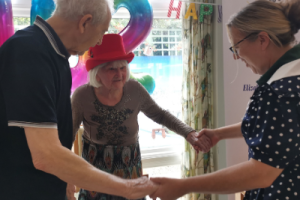
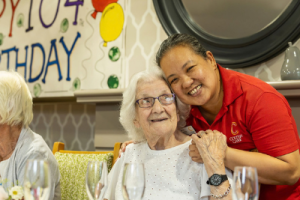
Alongside this, Victoria has drawn on her yoga teacher qualification to rethink traditional approaches, adapting sessions to better suit a neurodivergent audience. She also delivers chair yoga sessions in care homes, offering residents opportunities to engage in movement, breathwork, aromatherapy, singing and dancing. These sessions are designed not just for physical wellbeing, but to lift mood and create moments of connection.
She is deeply committed to her “crew” of older people, and her sessions are as much about joy and engagement as they are about routine and structure. They rarely fail to bring smiles to everyone’s faces.
Now, Victoria is developing a consultancy to support parents of autistic children, helping them better understand what being autistic means and how to support their children in a way that reflects their individual needs. Her focus remains on creating greater awareness of autistic culture, communication differences, sensory processing and the importance of predictability and routine.
What began as a late diagnosis has become a new direction — one rooted in lived experience, empathy and a determination to make things better for others. It is also a reminder of how many people may go through life misunderstood, and how powerful it can be when understanding finally arrives.