

Over the last few decades, our population has changed dramatically. These changes are extremely welcome: people living longer than ever, well into old age, able to spend many more years with friends and family after retirement. The scale of this ageing is huge, with the number of over-65s expected to increase from 12.4m today, to around 17m by 2040.
But these changes necessitate a re-imagining of our social care system. The status-quo will not suffice. Yes, in terms of increased funding to meet the needs of the growing number of older people. But equally as important, thinking differently about how we care for older people, and the kind of settings that are appropriate to support people as they age in this new era.
Living longer currently doesn’t always mean living healthier for longer, and we’ve got to develop social care models that support independence and good health so that we change this. Our present system only offers part of the solution. Established models of care largely fit into two categories: care at home, or a care home. Both absolutely vital options of course, for example in the way that care homes provide high-level care for those in the last few years of life.
But what about an older person who wants somewhere with a little more support and care, but for whom a care home would be totally inappropriate?
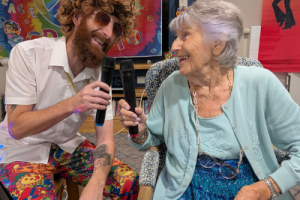
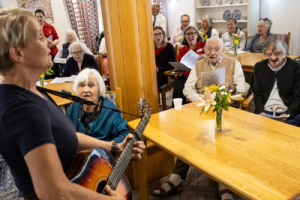
That’s where newer options like Integrated Retirement Communities come in. They combine independent living for older people through renting or owning a flat, together with 24/7 onsite staffing, high-quality social care for those who need it, and a wide range of communal services and facilities.
Residents often move in needing no care, but have the flexibility to increase this over time. By contrast, around 20% actually need less care after they move in, owing to the health and wellbeing benefits experienced. These are also borne out by the fact that NHS costs like GP and hospital visits go down by an average of 38% per resident, and average hospital stays decline from 8-14 to 1-2 days.
We are realistic that Integrated Retirement Communities are not going to be the whole answer. Other innovative social care models are emerging, such as Shared Lives initiatives that enable people to bring someone needing extra support and care into their home and family life, creating intergenerational connections and making care personal.
What is true is that options like Integrated Retirement Communities need to grow to a much greater level than current supply. A mere 0.6% of over-65s in the UK have the chance to live in this kind of setting, compared to at least 5-6% in New Zealand, Australia and the US. Expanding provision is exactly why we launched a new review in partnership with Professor Les Mayhew of the International Longevity Centre, whose findings out later this year will include projections of the tens of thousands more Integrated Retirement Community homes needed per year.
But how to achieve this? That’s where the cross-department Older People’s Housing Task Force announced by the Government becomes crucial. While many of the benefits of our sector lie in the social care world, many of the changes needed to increase supply lie in the housing and planning world. For example, increasing clarity in the planning system and developing an appropriate model of tenure.
The Task Force provides a once-in-a-generation opportunity to change things for the better and give older people the social care options they deserve. Yes, care at home and care homes will continue to have a crucial role. But our imagination should not be limited to these two ends of the spectrum, and new models that combine independence with care and support, such as Integrated Retirement Communities, must have their proper place.
Our ageing population is a fantastic thing in so many ways, allowing people to live longer than ever. But we must also respond to it in the right way, and create a social care system fit for the new era. If we don’t act now, it will soon be too late