

Elzbieta Walijewska-Aglan, Health and Wellbeing Specialist and Alice Mitroi, Care Home Manager at the Royal Alfred Seafarers’ Society, discuss how to support positive mental wellbeing in a care environment
Although mental health and wellbeing has always been a priority for care homes, it is often enveloped into physical care plans and not viewed as a separate issue. This is problematic in that what is required often varies from person to person and the care does not lend itself to standardisation. A resident’s care needs, preferences and personality must all be considered.
With the care sector coming out of Covid restrictions after two years, now is the time for homes to consider that mental health care must be handled differently to standard physical care of residents. In 2021, the Royal Alfred Seafarers’ Society put together a designated Health and Wellbeing team to do just that.
The pandemic highlighted residents’ feelings of loneliness and isolation; with care home residents often confined to their homes, a sustained period of lockdown only compounded this. Therefore, post-lockdown, it is important that care homes make mental health care a priority.
Why the universal approach fails
Different residents have different needs; for example, a general activity plan may not account well for a resident with dementia. Equally, certain activities will be unsuitable for those with mobility issues and other activities will poorly accommodate non-verbal residents. Simply put, an “activities for all” strategy will always be exclusionary.
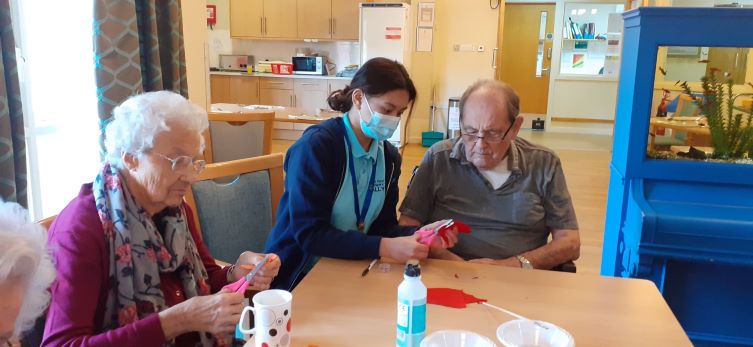
Furthermore, not all residents will engage with the same activities. You can always tell when someone is enjoying doing something and when they are not. During a colouring activity, for example, a resident expressed real gratitude and coloured happily for hours whereas others were less inclined to join in. On the other hand, one of our residents – who normally struggles to form sentences – enjoyed a film night because she was able to clearly express how she felt. All of these factors should be considered when creating an activity plan.
Prioritising individual mental health needs
The best approach to addressing residents’ mental health and wellbeing issues is to focus on the individual needs of each resident. To do this successfully, homes must devise strategies for each resident based on their individual needs and factor this into mental and physical activity planning. Carers should not be afraid to think outside of the box here.
Activities and approaches
When planning residents’ activities, it is imperative that carers involve both the residents and their families. At the Royal Alfred Seafarers’ Society, we conduct resident surveys to fully understand what hobbies and interests engage individuals and use this to gauge the right activity plan for each. Fostering a relationship with loved ones is also key to ensuring them that residents are properly looked after, are being understood and listened to.
When it comes to activities, any kind of movement is good. Time walking and sitting out in the garden, weekly exercises and gentle forms of dance and tennis are all ideas we have used to benefit our residents’ mental and physical wellbeing. Additionally, visits from schools provide stimulation through intergenerational conversation. There is much to learn for both sides and the feeling of respect from a younger generation is a fantastic positive affirmation.
There are myriad ways to make activity plans inclusive. For example, wheelchair only trips ensure that all participating residents can enjoy the day out to the fullest. Similarly, we have use guinea pigs as animal therapy for residents with dementia – just a few minutes with the animals each day can make the world of difference.
Adaption is key to success
Personalised activities are the best way to lift residents’ mental and physical wellbeing. But, while understanding residents’ preferences is the right thing to do, the process will be ongoing. A resident may enjoy an activity one day and less so the next, so being able to adapt plans is essential. Finally, carers must be assured that it is okay to not know everything from day one. As they continue to observe and get to know the residents more, they will develop a deeper understanding of what is suitable and what is not.