
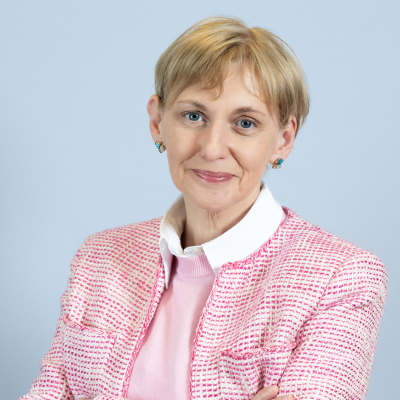

Rachael Shimmin, Chief Executive of Anchor, reflects on the responsibility of helping older people live well – and why the future of housing and care demands long-term thinking.
Other than my early career as a social worker in children’s services, I have to say that I am rarely kept awake at night. If I reframe the question though to consider what is most on my mind as a CEO, the answer to that is very simple: that we are doing all we can as an organisation to give our residents the very best we can, whether that relates to housing or residential care.
Day in and day out, thousands of older people rely on us and other providers of housing and care for a safe home and high-quality care and support that helps them live well. That is an enormous responsibility. It is also what gives our work its meaning. Every strategic discussion about policy, funding, recruitment or innovation has at its heart a person who needs to feel safe, valued, independent, and connected.
That is why consistency and quality matter. We want every resident to have confidence that they will receive consistently high standards of care, support and service, regardless of where they live or which service they use.
The challenge for us and all providers is that we are trying to deliver services in an environment that continues to be complex, fragmented, and confusing, with an as-yet unresolved national approach to adult social care. And yet the needs of residents are here and now, regardless of what is happening around us.
Our leadership task is to balance our thinking about how we deliver great services with consideration of how we plan the service delivery of the future. That means investing in our homes, our technology and our people, and considering both current models of housing and care alongside what might need to be different in the future. It means being clear about what we can control: excellent services, listening carefully, improving continuously and keeping residents at the centre of every decision.
Despite our challenges, I remain optimistic. Having lived through many governments suggesting that they will ‘solve’ adult social care, we should once again lean into this debate and help with the thinking at a national level based on our experience of providing those services. A new Prime Minister with a track record and lived experience of the social care system, and the Casey Commission’s Big Conversation, mean that we have tangible opportunities to rethink how housing, care and support work together.
Older people do not experience life in separate categories of housing, health, and care. They are part of communities and want and need joined-up support that helps them stay independent, healthy, and connected to their communities. Supported housing contributes directly to wellbeing and quality of life. Care and support should help people maintain independence for as long as possible and provide confidence when more help is needed. Let’s think more widely as a country and as a society about the role that housing and care can provide: for example by using specialist residential care to help people avoid admission to hospital or encourage early discharge either as a residential based re-ablement service or as discharge to assess provision. Let’s consider extra care as a step along the way in helping people regain their independence before returning to their own homes
What I don’t want for older people is the experience that happened to my Nanna, a profoundly deaf woman who co-parented me for much of my childhood. Following a fall in her 80s there was no attempt at re-ablement or confidence building, no review of medication or consideration of need. A proud member of the deaf community, she ended her years in a residential environment in which not a single member of staff learned to sign, no one had any regard for whether she wore her own clothes or not and where people referred to her without using the first name that she had adopted from birth.
Any plan for a different version of social care can only succeed if we think about what people actually need to maintain as much independence and control as they can. Alongside that, workforce is clearly a huge consideration because no matter how grand our ambitions, or how carefully we think through new models of care, they can only work if we have great people to deliver services. That requires strong leadership and management, a positive culture, and a workplace where people feel valued, heard, and supported.
In Anchor we are determined to do more to listen not only to our residents but to our colleagues. None of us have a monopoly on wisdom, no matter what our job titles or how much we are paid. The people closest to residents often understand most clearly where we are making a difference and where we need to improve.
My experience in transforming and improving services has taught me a number of important lessons about co-creation and design. Successful transformation is ultimately about people. Systems and structures matter, but lasting change comes from engagement both within and outside organisations, developing trust and clearly focussing on outcomes.
If I could change one thing tomorrow, it would be to establish a long-term national commitment to the future of ageing, housing and care – and, critically, rolling out solutions that we can implement quickly and at scale with residential based re-ablement and more imaginative uses of extra care housing among them. The needs of an ageing population are not temporary. They require sustained attention, long-term planning, and investment in prevention as well as care.
Our work really matters in this space, let’s make our time in it count.