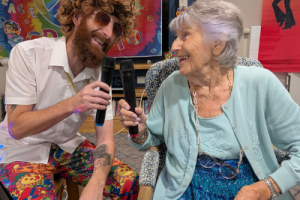


Seven years ago, Richard Tobin’s life looked very different. Today, he works as a Senior Support Worker at Storyy Homes, part of the Storyy Group, supporting vulnerable young people aged sixteen and over in semi-independent accommodation.
Calm, compassionate, and quietly confident, he is the kind of person many of the young people he works with turn to for stability. Yet his path to purpose began in a place of deep struggle.
Richard grew up in a loving home and describes his childhood as happy. However, beneath the surface, he wrestled with anxiety and an imagination that never seemed to rest. In his teenage years, he discovered cannabis and alcohol, which inevitably led to the exploration of harder substances. What began as a way to ease social anxiety quickly became a crutch. Drugs, he thought, helped him fit in and cope, but in reality, they only magnified the isolation he was trying to escape.
By his twenties, Richard’s world had started to collapse. Within a short period, he lost his father, his uncle, and his best friend. Overwhelmed by grief, he turned further to drugs. For the next sixteen years, addiction dominated every part of his life. He lived in a cycle of daily use, haunted by paranoia, depression, and fear. He used alone, cut off from family and friends, convinced that there was no way back.
Everything changed one weekend when his mother noticed he was struggling and offered unconditional support. That moment of kindness broke through his denial. For the first time, Richard admitted that he needed help. Within a week, he entered a twenty-eight-day rehabilitation programme. There, he began learning how to face his emotions without numbing them. A therapist noticed his natural empathy and suggested that he might have a gift for support work or counselling.
Recovery was far from easy. Leaving rehab, Richard knew he couldn’t stay clean on his own. He immersed himself in support groups, volunteered at recovery meetings, and slowly rebuilt his confidence. He still attends those meetings today, crediting them with teaching him honesty, accountability, and community.
When he decided to look for work, Richard was open about his past. He applied for a support worker position and called the Operations Manager, Mark Jolly, to explain his story. Rather than judging him, Mark respected his honesty and offered him a chance. Richard threw himself into the work, starting as a Support Worker before progressing to Senior and even covering as Team Leader. When Mark later helped to establish Storyy Homes, Richard knew it was where he belonged.
Now, he uses his own experience to guide others through their own challenges. For many of the young people he supports, Richard represents hope and understanding. The work can be emotional, especially when it is time for a young person to move on, but seeing them thrive makes it all worthwhile. One former resident, now working at the Jobcentre, still keeps in touch to thank him for his support.
Richard knows that recovery is an ongoing process. He recognises the old patterns in small things, like the time he got seven tattoos in a single month while stressed at university. The difference now is that he pauses, reflects, and reaches out for help instead of retreating into addiction.
He no longer hides from his past. Instead, he sees it as the foundation of his purpose. His journey through addiction has given him the empathy and resilience that define his work today. As he puts it, if sharing his story helps even one person believe that change is possible, then it has all been worth it.