

Saint John of God Hospitaller Services becomes The Do Good Charity – taking its new name from a centuries-old expression of its founding mission
A charity whose origins lie in the revolutionary work of a 16th-century Catholic saint is taking a new name which brings its centuries-old mission into modern-day English.
Saint John of God Hospitaller Services (SJOG) has become The Do Good Charity, after more than 140 years of supporting people in the UK.
Far from turning its back on its religious heritage, the charity says the new identity takes it directly back to its roots.
Its story began with João Cidade – Saint John of God – born in Portugal in 1495, who worked as a shepherd, soldier and bookseller.
After experiencing the treatment of people with mental illness at first hand, he dedicated his life to changing the way poor, sick and marginalised people were treated.
He established a hospital in Granada in 1539 which challenged many of the practices of the age by putting love, compassion, dignity and hospitality at the centre of care.
The religious order that developed from his work became known in Italy as the Fatebenefratelli – the “Do Good Brothers”.
Today, that same idea has inspired the new name of its UK charity.
Paul Bott, Chief Executive of The Do Good Charity, said: “It’s a new name, but the same heart since 1880. The 500-year-old philosophy of hospitality is still the bedrock of our work. It’s still mission-led, and underpinned by catholic social teaching. Doing good has been at the heart of this organisation for generations.”
The Hospitaller Order of Saint John of God, founded in 1572, is now present in more than 50 countries across five continents and supports over 7 million people a year. The first Brothers arrived in Britain in 1880.
Today, The Do Good Charity supports more than 1,800 people every month across 60 UK communities, providing housing, care and specialist support for disabled and autistic people, people with complex needs and older people, while its digital services reached more than 97,000 people during 2025.
The organisation also continues to work alongside religious orders and congregations, helping them care for ageing members while retaining the founding ethos of their communities.
Its current work includes relationships with religious communities and services in Kent, Birmingham, Oxford and Sunderland, alongside consultancy and support involving congregations elsewhere in Britain.
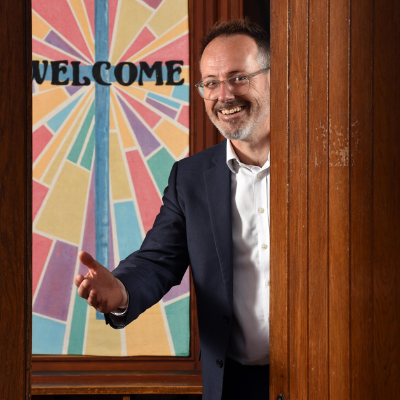
Hospitality remains central to the charity’s approach. For The Do Good Charity, that begins with a simple invitation: “Come on in, You are most welcome, How can we help?”
The charity describes its 562 workers, as guests in the lives of the people they support and says care should be shaped around the individual, rather than expecting the individual to fit an organisational model.
Paul said: “SJOG was familiar to the people who already knew us, but it did not necessarily tell someone encountering us for the first time who we were or what we stood for. The Do Good Charity does exactly that. It puts our purpose into plain English and, importantly, it is also an invitation.
“We’ve been quietly doing good since 1880 following the example of our founder. Now we need people to know who we are because we want to share our learning, partner with others and do more good in the communities where we work.”
The change comes alongside a new strategy to 2030 based around three commitments: Do Good, Do More Good and Do It Well.
The charity intends to increase its support for disabled people, people with complex needs and older people, while also working more closely with charities and community organisations.
Its commitment to its historic mission will remain unchanged.
Hospitality, Compassion and Respect remain its three core values and the charity will continue to support people of all faiths and none.
Paul added: “We are proud to have a history stretching back centuries, but this is very much about what comes next. Our ambition is not simply to grow for the sake of being bigger. We want to increase our impact – reaching more people, building stronger communities and helping more people to live well, with dignity and opportunity.”