
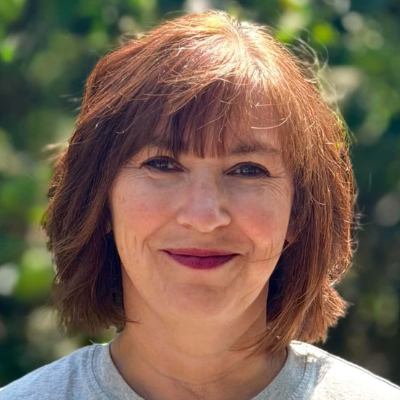

As Lisieux Trust marks 40 years, Chief Executive Dr Emma Hodges is looking ahead—and asking what growing older will mean for the people it supports. From families facing crisis to protecting rights under pressure, she shares the questions keeping her awake and why community, compassion and belonging must shape the charity’s next chapter.
Joining the Lisieux Trust in its 40th year created a real opportunity to reflect on the history of the charity as well as thinking about our Vision 2036 review. Preparing for our 40th anniversary celebration has been a wonderful trip down memory lane for the organisation, reflecting on the original purpose of the charity and the people who made it happen. Lots of photographs and stories have been shared. The original ethos was one of community, opportunity, compassion and belonging. The charity emerged out of the recognition that smaller households rather than large institutions were better for the lives of people with learning disabilities and autistic adults. In Royal Sutton Coldfield there was no provision and with significant determination and hard work, the first house was opened. Today Lisieux Trust has four residential care homes and seven supported living properties in Royal Sutton Coldfield and neighbouring Erdington, North Birmingham.
I am new to the learning disability and autism sector with my background being a combination of human resources, charity leadership and public health palliative and end of life care. For several years I have been involved in an international movement known as Compassionate Cities or Compassionate Communities which is an element of public health palliative and end of life care. This work taught me about the critical importance of social connections, community, belonging and the responsibility of all of us in improving the impact of death, dying, loss and caregiving of our family members, friends, neighbours, colleagues and anywhere we can. I am still part of this movement and will continue to be so.
From my prior work I was aware of the health inequities and poorer experience of palliative and end of life care for people with a learning disability or autistic adults. I am enjoying learning about the lives and experiences of the people we support and their families whilst also recognising the overlap with my previous roles.
I hadn’t heard of the Lisieux Trust, and I joined originally as a part-time Interim Chief Executive. During that time, I was drawn to the ethos and culture of the organisation and the close involvement of our residents, tenants and family members. I was delighted to be appointed as the new permanent Chief Executive; I really feel alignment with my values and the desire to make a difference to communities often ignored or misunderstood.
In the ‘small world’ of human connection, the founder of the Lisieux Trust happened to be a bereavement and spiritual care volunteer at the hospice I worked at. She remembers painting my children’s faces at a Christmas event and I remember her tearing out articles that she felt I might be interested in and leaving them on my desk with a note. Discovering that connection further helped me understand the ethos of what she and others had founded.
As I look forward to Vision 2036 taking us to our 50th year, there are a lot of thoughts and considerations. There are also lots of questions!
To what extent have the voices of people with learning disabilities and autistic adults been considered as part of the Healthy Ageing strategy. As the people we support live longer, what are we doing to prepare them for healthy ageing? How are we supporting families as siblings start to be engaged more due to older parents? How are we supporting the whole community on issues relating to death, dying, loss and caregiving? What is the impact of the ageing demographics on our properties e.g. incorporating best practice dementia design principles?
How do we ensure, via public education that the benefits of supported living or residential care are fully understood so that there is time to support a family transitioning into charities like ours, rather than a family holding on, in crisis, for as long as they can, meaning the transition can be more difficult.
How do we truly protect the human rights of the people we support and not fall into the trap of some of the less positive aspects of a ‘care service’ when the labour market is so challenging. Combined with ensuring a sense of personhood and purpose in a society that does not value all people equitably.
Also, of course, how do we create a compassionate community around our households that can weather the storm of austerity and policy change via social capital, volunteering and a sense of connection.
Fortunately, my role is to co-produce Vision 2036 which from looking backwards over the past 40 years allows me to focus on looking forward. I hope with the support from the Lisieux Trust, the wider community and many connections I’ve made, and will make along the way, we can ensure that the founders’ aspirations and ethos guide us amongst the various challenges we face in today’s world.