
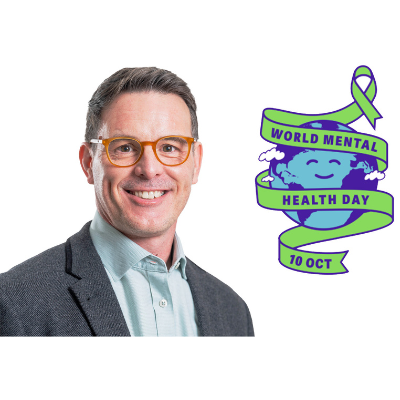

On Saturday, October 10, people around the world will come together to mark World Mental Health Day, raising awareness of mental health issues and mobilising support for better mental health care worldwide.
Events like World Mental Health Day, founded and globally coordinated by the World Federation for Mental Health, play an important role in keeping mental health high on the agenda. They give us an opportunity to have conversations, challenge perceptions and shine a spotlight on the importance of mental health.
But these conversations shouldn’t be limited to one day. Supporting good mental health and making sure people’s voices are heard is something we should be focused on throughout the year.
I particularly like this year’s theme, ‘Lived experiences heard: real voices, real change’. It puts the voices and experiences of the people we support at the heart of the conversation, and that chimes perfectly with how we work at Lifeways and how we want to continue developing our services.
For us, a key part of this is seeing the person beyond their ‘diagnosis’ or ‘needs’. That means taking the time to understand the individual: their life, circumstances, relationships, ambitions and what matters to them.
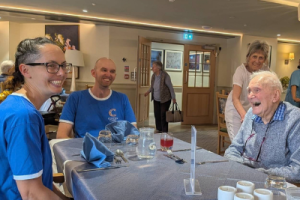
From a Mental Health division perspective, this is something we’ve been increasingly focused on over the past couple of years through the development of our Our Voice Network. The network gives people we support an opportunity to come together, share their experiences and build connections with others across Lifeways.
What has been particularly encouraging is seeing where those connections can lead. This summer, I attended an Our Voice event in Bedworth, bringing together people from across Birmingham, Coventry, Peterborough and Northampton. Many of those attending would never otherwise have crossed paths, yet through the network they have formed friendships and continued to keep in touch independently of Lifeways.
That is something we probably wouldn’t have set out to create ourselves. We might have asked why someone living near Coventry would want to build a relationship with someone in Northampton. But by creating the right environment and giving people the opportunity, those relationships have developed naturally.
For me, that is the real value of this approach. Our role is to create the environment, provide the support and give people permission to shape the network in the way that works for them. It also gives us a more structured way of understanding what people think about our services, what could be improved and what changes they would like to see.
This links closely to our wider recovery-focused approach. We want to support people to achieve the goals that are important to them, while also helping them think about what those goals and aspirations might be.
Sometimes, when someone first comes into one of our services, they may not have much hope for the future or a clear sense of what they want for themselves. Our role is initially to give them space to settle, feel comfortable and build a trusting relationship with our teams. From there, we can start to explore what might come next.
Those goals can look very different from person to person. For one individual, it might be going on holiday, starting a job or going to college. For someone else, it might be something as simple, but equally significant, as preparing a meal for the first time.
I recently visited one of our services in Lancashire where someone had experienced significant challenges around eating and had never really learned to prepare their own meals. That day, a support worker went with them to the supermarket to buy the ingredients for a cottage pie. They were going to prepare it together that evening – something completely new for that person.
It might seem like a small achievement, but those are exactly the kinds of milestones that can build confidence, independence and a sense of what is possible.
Recovery is also about supporting people to manage challenges rather than taking control away from them. There may be times when someone is experiencing difficult thoughts or is at risk of harming themselves. Our responsibility is to support them to manage those experiences safely, while continuing to give them as much choice and control as possible.
Ultimately, listening to people isn’t simply about asking for their views. It’s about being prepared to act on what we hear – and being open to people taking things in directions we didn’t expect.
That is what ‘Lived experiences heard: real voices, real change’ means to me. It’s about creating the space for people to have a voice, listening to what they tell us and giving them the opportunity to shape their own lives and the services that support them – not just on World Mental Health Day, but throughout the year.
By Mark Spraggs, Managing Director of Lifeways’ Mental Health division