


How one nurse is helping care teams look beyond behaviours that challenge and understand what the people they support may really be trying to tell them.
A resident who was once sociable suddenly stops joining activities. Another becomes resistant to care. Someone becomes distressed by a routine they previously accepted.
It can be easy to focus on the behaviour. But what if the behaviour isn’t the problem at all?
It may be communicating something deeper: fear, pain, a memory, loss of independence, an unmet need or an emotion the person can no longer express in the way they once did.
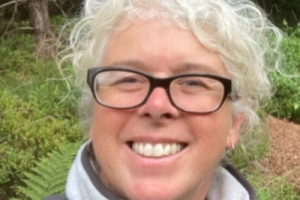
For Salina Sabur, Clinical Operations Support at Langdale Care Homes, understanding what sits behind these responses is an increasingly important part of delivering good care.
A dual-registered Adult and Mental Health Nurse with a First-Class MSc in Nursing, Salina works alongside care teams to strengthen their understanding of how mental health, emotional wellbeing and communication influence the way people respond to care.
Her approach starts with a simple question: rather than asking how we stop a behaviour, should we first be asking what the person is trying to tell us?
This approach has encouraged teams to think differently about the people they support. Rather than viewing actions in isolation, staff are supported to consider an individual’s life experiences, routines, preferences, emotional wellbeing, communication needs, cognitive abilities and environmental influences.
For many residents living with dementia and other cognitive conditions, responses that may appear challenging are often linked to difficulties processing information, expressing needs, understanding their surroundings or coping with situations that may feel confusing, unfamiliar or distressing. When viewed through this lens, what may initially seem difficult to understand often begins to make sense.
The benefits extend far beyond clinical practice. When staff feel confident in understanding the reasons behind a person’s responses, they are better equipped to provide reassurance, reduce distress and develop support strategies that are both compassionate and effective. Residents benefit from more personalised care, families gain greater confidence in the support being provided and care teams develop stronger professional confidence.
Across the sector, there is growing recognition that mental health should not be viewed separately from physical health. Emotional wellbeing influences how people communicate, engage with others, respond to care and experience daily life.
For residents living with dementia, anxiety, depression, trauma or other mental health conditions, these responses are often a form of communication rather than deliberate actions. Due to changes in cognition, memory, perception and understanding, individuals may express fear, frustration, discomfort, confusion or unmet needs in ways that others find difficult to interpret.
This is why education and professional development remain such important parts of improving care quality. Through mentoring, guidance and collaborative working, professionals like Salina are helping to equip care teams with the knowledge and confidence needed to respond to increasingly complex needs.
The future of social care will not be defined solely by new technologies, improved systems or changing regulations. It will also be shaped by our ability to understand the people we support more fully.
Behind every expression of distress, uncertainty, frustration or unmet need is an individual with a unique history, a lifetime of experiences and a story that continues to matter. The more effectively we understand those stories, the better positioned we are to deliver care that is not only clinically effective, but genuinely compassionate.