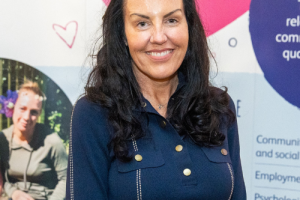


Aaron White, Assistant Director of Corporate Services and Sustainability at Oakland Care, explores how procurement choices, supplier partnerships and everyday operational decisions can help care providers reduce waste, lower costs and cut environmental impact.
Aaron White is Assistant Director of Corporate Services and Sustainability at Oakland Care. He is a graduate of Environmental Management from Durham University and has worked in the care sector for almost 15 years in various management roles at both home and regional levels.
White plays a key role in overseeing the implementation of systems and processes throughout the Oakland Care Group, from IT infrastructure to systems, equipment and waste management. This includes during the building and commissioning of new homes where he focuses on ensuring that homes operate effectively and efficiently.
Integral to his work is driving forward the implementation of Oakland Care’s sustainability strategy in every aspect of operations, ensuring that the business is future-proofed and delivering its services sustainably.
Across the sector, care providers are recognising a need to reduce their environmental impact. However, the challenge is often how to balance this with factors such as cost, the continued delivery of high-quality care and growing demand for services. As a result, many remain heavily reliant on standard operational models and the security that comes from the familiar.
But providers must look beyond this and begin embedding circular economy principles. This is not only a pathway to reduce emissions; it can also ease pressure on budgets and support resilience for the future. To have the greatest impact, however, circular thinking cannot be considered in isolation. It must be embedded within a wider sustainability strategy where environmental considerations are applied at every opportunity.
In 2020, Oakland Care took its first steps on its own ‘green’ journey. Since then, we have become the first care home group in Britain to be certified as a carbon neutral business and have continued to lead the way within the sector when it comes to sustainability.
A key part of our strategy has been transforming our procurement and supply chain processes. Circular economy principles have been steadily embedded over the last five years across each of our homes. While we have a bold strategy that we are delivering against, at a practical level we champion the familiar ‘Reduce, Reuse, Recycle’ model.
For example, we have introduced a circular computing model which involves acquiring recycled laptops rather than buying new equipment each time, replacing technology only when it is necessary. This has reduced our carbon footprint in this area by 93%.
Within our kitchens we are using a tool that has reduced the amount of oil we use by 20%. Across our homes we have also changed the types of toilet roll and kitchen towel used, opting for products made from recycled materials and without colouring dyes.
Recycling systems operate across all homes, and teams are encouraged to build local links with charities that can benefit from donations. It is important that staff see these changes and feel part of the process. This helps generate new ideas and ways of improving how homes operate sustainably, with every home, department and team member encouraged to make suggestions through initiatives such as our Green Committee.
The committee, composed of two representatives from each of our homes, provides a platform for sharing ideas and examples of best practice within their communities. This is reinforced with insight and advice from head office teams across different departments.
Tracking these processes is also critical. Carbon footprint measurement has been an integral part of our sustainability journey, supported by systems such as asset management trackers and waste management platforms.
Much of a provider’s environmental impact sits within its supply chain, where embedded carbon and resource use are significant. This means meaningful progress cannot happen in isolation and depends on working in partnership with suppliers.
Alongside quality and price, sustainability is a key credential we assess during tenders and embed within contracts. We also build on this by setting shared sustainability expectations, collaborating on lower-carbon product development and increasing transparency around Scope 3 emissions.
Each year we hold a conference with suppliers to discuss opportunities for improvement, with a strong focus on sustainability. We also remain open to working with new suppliers who offer greener, more sustainable products.
One challenge we have faced is that many suppliers offering more sustainable products are SMEs. Compared with larger suppliers this can affect delivery times, but we have found this manageable and worthwhile. It is easy to choose the simpler route, but remaining committed to sustainability is important.
From our experience, larger suppliers often respond positively and seek to build relationships with these smaller businesses to stock their products themselves.
Cost is another consideration. However, there is growing positive momentum across the industry and supply chain, meaning the need to balance sustainability and affordability is becoming less restrictive.
Ultimately, circularity is not about compromising quality of care. It is about refining systems to deliver better outcomes with fewer resources. Done well, it strengthens resilience against supply shocks, reduces long-term costs and supports future-proofed care delivery.
As net zero targets approach and regulatory scrutiny increases, the question for providers should increasingly shift from whether circular approaches are possible to how quickly they can be embedded into everyday practice.