

Dr Mary Edmonds is the Deputy Dean for Practice Learning and Simulation at the Faculty of Health, Medicine and Social Care at Anglia Ruskin University. Here she discusses how a unique partnership with the Samaritans is helping students build confidence, compassion and communication skills that will shape their future careers in health and social care.
At Anglia Ruskin University (ARU), we believe the most powerful learning happens through collaboration. That’s why we partnered with the Samaritans to provide placements for Nursing, Paramedic and Social Work students — a first-of-its-kind initiative designed to help them understand the importance of listening, empathy and emotional support.
These placements gave students a rare opportunity to learn directly from one of the UK’s most trusted emotional support charities. The aim was simple: to deepen their understanding of the Samaritans’ work and strengthen their skills in supporting individuals struggling with their mental health.
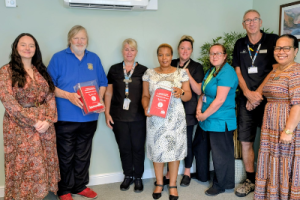
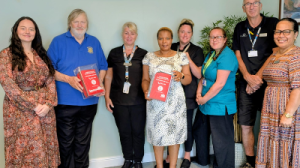
This partnership went further than traditional placements. ARU students and staff were trained as Samaritans volunteers, supporting the charity’s online chat pilot and telephone services. It marked the first time the Samaritans had partnered with a university, creating a model that bridges education, mental health and social care.
While the Samaritans are not primarily a social care service, their work has deep links to the sector — particularly in supporting people experiencing loneliness, addiction, isolation and mental distress. Their expertise in suicide prevention and emotional support provides a vital connection to the challenges faced daily by health and social care professionals.
Placements offered students a unique opportunity to develop self-awareness, empathy and resilience. Over a one-week virtual placement, they learned how to be active listeners — to give someone space, use silence effectively, and respond with empathy rather than instruction. Experienced Samaritan facilitators created a safe environment where students could practise open questions, reflection and summarising. They also explored how to support someone who might be self-harming, in crisis, or in need of distraction from difficult thoughts.
Students from a wide range of disciplines — including Mental Health Nursing, Adult Nursing, Children’s Nursing, Paramedic Science, Occupational Therapy, Physiotherapy and Social Work — took part. Staff from the Samaritans and ARU worked closely to tailor training to each discipline.
For example, Children’s Nursing and Social Work students developed strategies for talking with young people and taking action to prevent or reduce self-harm. Paramedic students focused on understanding people experiencing suicidal thoughts, learning how to assess risk, create safety plans and manage difficult conversations.
By participating in a Samaritans placement, students developed vital communication skills that enhance both professional competence and personal growth. The experience helped them better understand mental health, build confidence in supporting vulnerable people, and connect with empathy and patience.
Active listening is fundamental in social care. It helps practitioners grasp the full context of a person’s life — hearing not only what is said, but what is meant. This deeper understanding allows for tailored support that meets individual needs. When professionals listen without judgment, people feel heard, validated, and more willing to open up.
Through this collaboration, students learned to recognise distress, manage sensitive conversations and build trust — skills essential for working with people facing complex emotional and social challenges.
The skills cultivated through a Samaritans placement are not only relevant but transformative for social care. They lead to better engagement, improved referrals and stronger care outcomes. Most importantly, they help future professionals bring kindness and understanding to every interaction.
When students learn to listen like a Samaritan, they don’t just hear — they connect. And that connection is what truly changes lives.