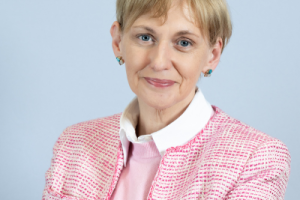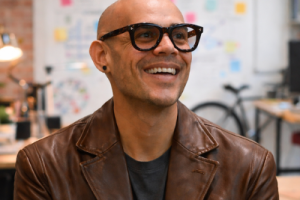



Admiral Nurse, Chris Knifton has been working with Dementia UK as a specialist dementia Admiral Nurse for over a decade. Through his personal experience of being diagnosed with autism and professional experience supporting families living with dementia and autism, he is sharing vital insight around the challenges facing families living with both conditions.
I was diagnosed with autism at 42 the age of while studying at university. I’d gone many years without understanding why I felt my brain worked differently, and why I felt different to other people too. I am now in my 50s.
My diagnosis followed years of challenges but also, what I call ‘neurodiverse-abilities’. I really struggled with social situations, communication, common sense understandings, sensory and social fatigue. Other things came easily to me such as complex thinking, cognitive multi-tasking, order/pattern assimilation and processes. Both of these things contributed to me feeling different to other people.
I’ve been working as a dementia specialist Admiral Nurse for the past decade. Admiral Nurses provide free, specialist advice, support and understanding to anyone affected by dementia, whenever it’s needed. We are continually supported and developed by the charity, Dementia UK.
Through working in this role and from my personal experience, I have come to understand the intricate challenges of living with dementia and autism, as well as being a carer with autism.
Autism is a lifelong difference in how a person experiences and interacts with the world. It can affect how someone communicates, builds relationships, handles change, and reacts to the world around them. More than one in 100 people are autistic and there are at least 700,000 autistic adults and children in the UK. Ten per cent of the autistic adult population will go on to develop dementia. Living with both conditions can be challenging to navigate.
Dementia and autism can have a similar impact on behaviours. This can include issues with communication and decision-making. It can be difficult to identify whether changes are due to a person’s autism diagnosis, or whether they are potential signs of dementia, or both. It can also lead to diagnostic overshadowing; meaning if the person is living with both autism and dementia, health and social care professionals may only consider that their behaviours are due to dementia and not neurodiversity, missing opportunities for reasonable adjustments to be made to improve the person’s quality of life.
Many people with autism ‘hide’ or ‘mask’ their behaviours to reflect those of their neurotypical peers. A person may well have been doing this their whole life, but if they go on to develop dementia they may be less able to mask, revealing behaviours which seem new or unexpected.
This overlap of behaviours can make seeking an accurate diagnosis of dementia difficult. Traditional memory tests are not suitable for everyone, and a thorough and sensitive assessment is important and should include input from people who know the person well. It also helps to work with professionals who understand both autism and dementia.
Every person is different. How symptoms of dementia show up and develop will vary from person to person. That’s why it’s important to know what’s typical for the person – and to notice if something seems different or unusual. If someone had previously masked their symptoms it can make it harder to understand changes in behaviour.
Living with a diagnosis of autism and being a carer for a person with dementia brings its own unique challenges too. Often, when someone is diagnosed with dementia they are handed information about their condition in the form of leaflets or brochures which is presented in a neurotypical format. A person with autism may struggle to engage with and process information in this format, making it more difficult for them to understand their loved one’s condition and offer adequate support.
Some people with autism may also struggle with organisation. With a diagnosis of dementia there often comes a large amount of administrative work – attending appointments, organising financial and legal support, and managing care and medication. This is made even more challenging if you are neurodiverse.
I recently supported an autistic carer whose mother was living with dementia. They shared that they were struggling to keep up with the bombardment of literature and appointments. I supported them by helping them find order and patterns in scheduling and by working to understand their learning and reading habits so I could select appropriate health literature for them and flag helpful coping strategies.
If we are to tackle the challenges around access to care for people living with dementia and autism, more research is needed to understand how best we can support people living with both conditions. From a practical perspective it is important to ensure information around dementia, whether that be leaflets, websites or posters, is suitable for a neurodiverse audience. This includes considering whether fonts, background colours and language are appropriate and easily digestible. There are some fantastic organisations that offer help and guidance with this across the spectrum of neurodiversity, including NHS England.
It may also be beneficial to consider environmental adaptations such as where healthcare appointments take place. It can be helpful to ensure there is nothing in the room that could be distracting for someone who is neurodiverse.
Organisations and bodies that support people with dementia and people who are neurodiverse can seek an Equality Impact Assessment (EIA). This ensures the services they are offering do not discriminate against people who are neurodiverse, and that they can provide a pathway for putting reasonable adjustments in place. This is useful for carers and people with dementia and also for staff or volunteers who work in these settings who might be neurodiverse.
Dementia UK’s Admiral Nurses are well placed to advise health and social care professionals on how to support someone living with dementia and neurodiversity. As dementia specialist nurses, we understand the emotional and cognitive challenges faced by people living with dementia and can help advocate to ensure every person living with the condition can get access to the care that is right for them.
Dementia UK recently partnered with Autistica, the UK’s leading autism research and campaigning charity, to develop a guide with helpful information and support for people living with autism and dementia. You can download the leaflet at dementiauk.org/wp-content/uploads/dementia-uk-autism-and-dementia.pdf
Dementia UK, the specialist dementia nursing charity, is committed to ensuring all families with dementia have equitable access to the care they need. If you need advice or support on living with dementia, contact Dementia UK’s Admiral Nurse Dementia Helpline on 0800 888 6678 or email helpline@dementiauk.org.