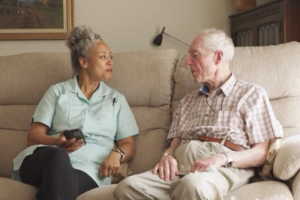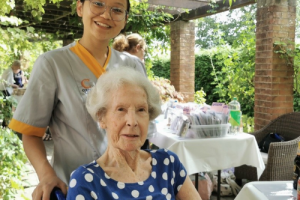


The Care Workers’ Charity has today published The Care Workers’ View: Delegated Healthcare Activities. Drawing on 358 survey responses and two roundtables with care workers, the report provides evidence on how clinical delegation operates across adult social care today, and what is needed to make it safe, fair and sustainable for everyone involved.
Delegated healthcare activities, tasks such as wound management, catheter care, PEG feeding and insulin administration that registered healthcare professionals traditionally carried out, are now a routine part of care delivery across adult social care settings. 67.87% of respondents reported being asked to perform them, across domiciliary care, supported living and residential environments. The question this report asks is not whether delegation should happen, but whether the workforce delivering it is properly supported when it does.
93% of care workers who perform delegated healthcare activities have never received additional pay for doing so. One care worker reported earning just 7 pence above the National Minimum Wage while routinely carrying out complex clinical interventions. These are tasks that carry clinical risk, require precision, and demand a high level of trust from regulated professionals and families alike. The absence of any financial recognition not only reinforces the longstanding undervaluation of care work but undermines the workforce sustainability the sector urgently needs.
Training presents an equally serious picture. 6.17% of respondents received no training at all for delegated healthcare activities. Of those who did receive training, the most common form was e-learning, which care workers consistently described as inadequate preparation for complex clinical tasks. More than a quarter of respondents had never had their competency formally assessed, and 31.5% reported receiving no supervision.
The implications extend beyond the care workforce. For people drawing on care, inconsistent training and absent supervision introduce real risk to the quality and safety of the support they receive. For the regulated healthcare professionals who delegate these tasks, the absence of robust oversight leaves accountability frameworks exposed. Delegation retains professional liability with the delegating clinician. Where governance is weak and supervision limited, that liability sits uneasily alongside the operational reality this report describes. Safe, ethical delegation requires adequate infrastructure at every level of the system.
Karolina Gerlich, CEO of The Care Workers’ Charity, said:
“This report reflects what care workers have been telling us for a long time that delegated healthcare activities are no longer exceptional. They are a standard feature of adult social care, and the systems around them must catch up. Care workers are willing, skilled and committed. What they need is training, clarity, and the fair pay that this responsibility carries. We are grateful to everyone who shared their experience to make this report possible, and we look forward to working with the Government and other stakeholders to act on what it shows.”
The report was developed with input from The CWC’s Care Worker Advisory Board, convened in February 2026, whose members were consistent and direct about what needs to change. Their priorities center on clarity about what constitutes a delegated healthcare activity, mandatory and standardised practical training, transparent accountability frameworks, and pay structures that reflect clinical responsibility. The report also notes the particular vulnerability of migrant care workers on sponsored visas, for whom speaking up about unsafe delegation carries additional professional and personal consequences, and calls for explicit protections for this group.
The Care Workers’ Charity is calling for:
- Mandatory, standardised training delivered in practice settings, not solely through e-learning, with formal competency sign-off by a qualified professional
- Pay structures that reflect the clinical responsibility that delegated healthcare activities carry, including clear career progression pathways for care workers who take on additional competencies
- Enforceable protections for care workers who refuse unsafe or inappropriate delegation, with explicit safeguards for migrant care workers
The Care Workers’ Charity developed this report as a foundation for meaningful change, not as a final word. We look forward to continuing to work with the Government, regulators, providers and care workers to translate these findings into policy and practice that is fair, safe and built with the people at its center.
The full report is available at thecareworkerscharity.org.uk/wp-content/uploads/2026/03/DHA-Report-1.pdf