


Martin Walker, Policy Advisor, Think Local Act Personal
“[I] worry about them leaving, worry about paying them enough so they don’t leave, trying not to do anything that may get their back up so they leave.”
This quote sums up the challenges for people who employ a personal assistant as part of their direct payment or personal health budget, according to a survey carried out by the Local Government Association and Think Local Act Personal earlier this year.
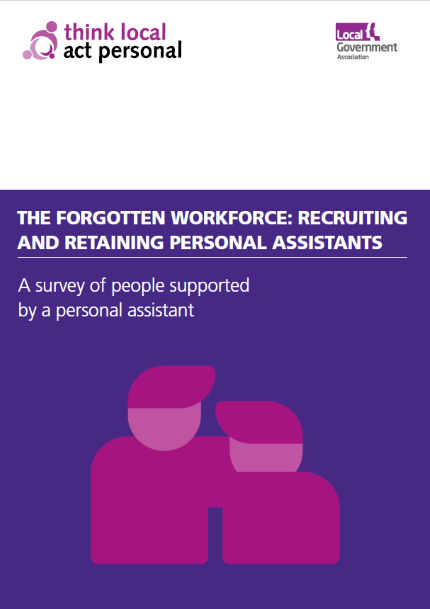 People who draw on care and support rightly value the choice and control that employing a personal assistant provides. PAs are a vital part of the social care workforce but are too often ‘forgotten’. Nearly a thousand people responded to the online survey, out of around 70,000 people in England who employ personal assistants – a very good result.
The survey shows that recruitment and retention are getting harder. Low pay and poor terms and conditions are the primary drivers, alongside the effects of the pandemic and a shortage of workers across social care.
“Recruitment is difficult. The pay, which is low, does not entice experienced carers. If they can get the same rate, or even more, working in Aldi without the same level of responsibility, they will choose to work elsewhere.”
Over a third of respondents said it had become harder to find the right PAs for them. The low esteem in which care work is held was felt to discourage people with the right skills, experience, values, and training from taking up work as a PA. Finding PAs able and willing to work the hours allocated was also an issue. People wanted more flexibility to manage their budget in ways that made it more attractive for PAs and suited them better too, in line with the expectations of the Care Act.
People also said that paying people if they were off sick, for working unsocial hours, and for holidays, should be built into budgets by funders when calculating direct payments and personal health budgets. All these factors contributed to difficulties in recruiting and retaining personal assistants.
People in the survey were very keen to offer potential solutions: over 800 people offered suggestions for funders, government, and care providers to consider, which serve as a rallying cry for change. These included:
- action on PA pay, the overriding issue needing attention
- support for people who employ personal assistants such as recruitment, training, and employment advice, as well as improving terms and conditions such as sick pay and travel time
- better information and advice for people, including parent carers, and knowing how to get emergency support when necessary
- greater oversight of the local PA market from commissioners, and assurance over third parties commissioned to provide support to people employing PAs, including proactively seeking feedback about this support.
We know from the social care white paper, People at the heart of care, that the government is keen to increase the uptake of direct payments and promote a personalised approach in both health and social care. Personal assistants are a vital part of the social care workforce, and their status and job satisfaction needs to be raised to overcome the challenges presented by this survey.
PAs are highly valued by those that employ them, and it will need action from all working in social care to make sure that they are no longer the forgotten part of the workforce. As one respondent said “[we need to] show that the government/country values people with disabilities and their inclusion in society so that people want to work as a PA.”
https://www.thinklocalactpersonal.org.uk/Latest/Personal-Assistant-Survey-The-Forgotten-Workforce/